Showing posts with label hammerhead sharks. Show all posts

Thursday, March 25, 2010

Poor porbeagle - no marine species listed under CITES at CoP15

In a shocking turn of events, the CITES parties reversed their earlier (GOOD, SOUND) decision to list porbeagle sharks, prized for their meat, under CITES Appendix II. No ban, just sound management measures in place for trade to be allowed. Obviously, this was clearly a crazy idea, once countries had a day or so to think about it, and so today in plenary, the vote was reversed. 84 were in favour of protection, 46 against and 10 abstentions. (You need 2/3rds majority for a vote to pass). The only other time this has happened was the red and pink coral vote at CoP14. Industry groups were thrilled that time, and now this time. The Japanese Fishing Association sitting in front of me broke into applause.

But let's look at it this way - many, many countries were in support of this proposal. More countries were in support of porbeagle protection, red and pink coral protection and hammerhead protection than they were against. That makes me proud of all those countries who considered the science and found it was sound, and pushed 'yes' for these species (on a related note, SeaWeb's Melanie Siggs pointed out to me that it's so odd to be voting on these species, as if we own them, and I agree). We now have to hold these industries and regulatory bodies responsible. ICCAT made a statement that said something along the lines of 'we base our decisions on sound science, we now have a clear mandate to conserve bluefin tuna." (Picture above.) When did you NOT, ICCAT? We'll be watching, and we'll be back at CoP16 if things don't start to turn around.

In the meantime, we must, as consumers, refuse to purchase red and pink coral, bluefin tuna, and none of you better be ordering any shark fin soup. There is simply no guarantee that the trade in these species is at all sustainable. Right now we need to take the precautionary approach. It's an interesting concept, countries-opposed-to-CITES-listings-for-marine species. You might want to consider it. And for the umpteenth time, these App II proposals for sharks and corals would not have been a ban on trade (the bluefin App I proposal, which DOES ban international trade, was much-deserved and needed). Perhaps if we had heeded Sweden's 19992 proposal to list Atlantic bluefin under Appendix I, we would not be where we are now. And trade in red and pink corals, for example, could have continued under Appendix II. Now it continues, regardless, unchecked and unregulated....and unsustainable - for these species and the people that depend on them.

Wednesday, March 24, 2010

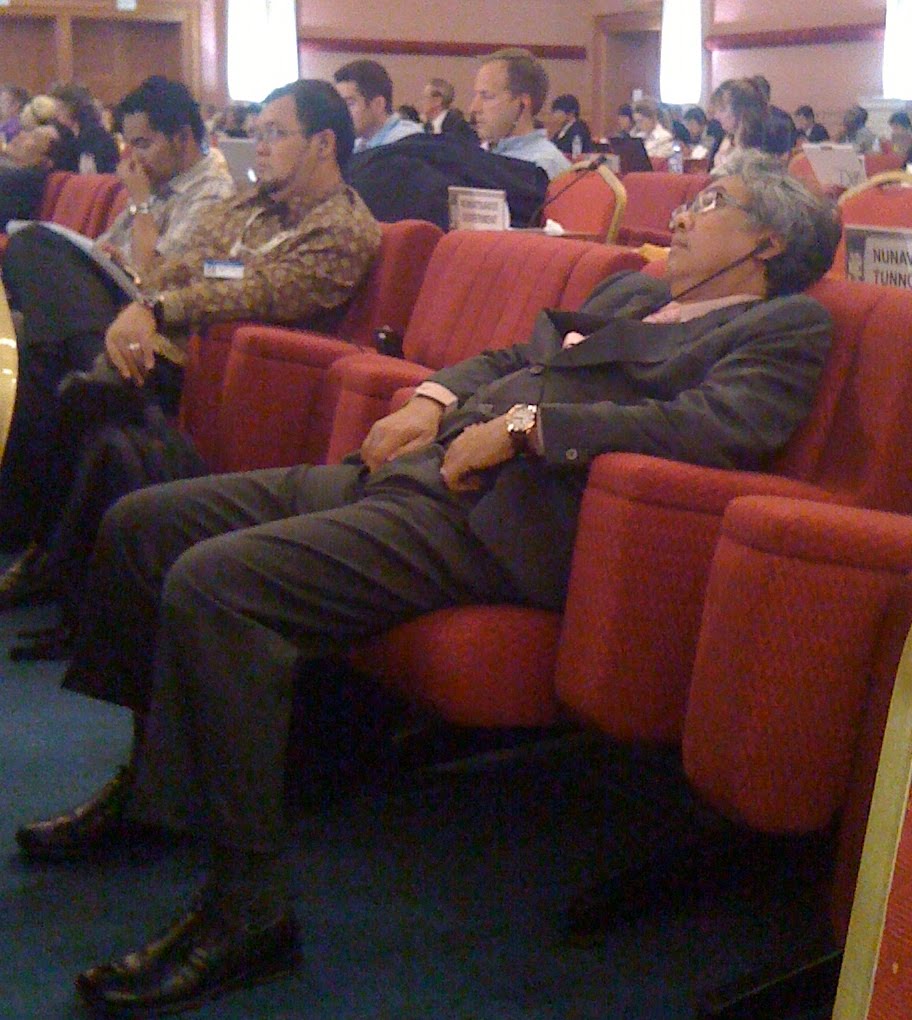
Dozing in Doha


My feeling exactly on the first day of plenary....we don't get to the species proposals until tomorrow. Right now we are going through the piles upon piles of documents that were tweaked/parsed/edited agreed in Committee II and various working groups.

Thursday's plenary should be pretty exciting. This is when all species proposals that have been considered over the past two weeks can be reopened (not that they all will). I bet (fervently hope) most shark proposals will be reopened (except for perhaps spiny dogfish). Keep your fingers crossed that a) porbeagle remains listed (I bet some crafty opposing countries will be trying to get this ONE LONE GOOD DECISION on marine species here at CoP15 reversed) and b) that hammerheads can get the necessary votes to reverse Tuesday's decision. Most hammerheads are caught (on purpose or as bycatch to supply the lucrative fin trade) so this would go a long way in addressing the unregulated shark fin trade. And the ever-brilliant Dr. Phaedra Doukakis (who as I type is doing an interview for ABC's Moscow bureau on her recently released sturgeon paper which shows that sturgeon are more endangered than any other group of animals) told me that DNA analysis on fins is increasingly easy to do (and I believe one of the country interventions yesterday said that DNA analysis was becoming more affordable and available).

Tuesday, March 23, 2010

The FAO panel is providing political cover, nothing more (for the moment)

The FAO ad-hoc advisory panel on commercially-exploited aquatic species for consideration under CITES. Still with me or did you fall asleep? Yes, it's a long title for what is essentially a panel. And this will be a heavy post. But holy endangered species, there is A LOT of emphasis (for better or for worse) on the panel's recommendations when you start talking CITES.

A quick refresher on FAO. It's the United Nations Food and Agricultural Organization. It has a dedicated fisheries and aquaculture department whose mission is to "facilitate and secure the long-term sustainable development and utilization of the world's fisheries and aquaculture." FAO attempts to promote solutions to advance this mission, and a great deal of its work is monitoring, collecting and analyzing data from the world's fisheries and fish farming productions (see its SOFIA report). Its relationship with CITES has been contentious at times, because of a Memorandum of Understanding that was adopted between FAO and CITES in July 2006. The MOU essentially said that FAO and CITES should coordinate their efforts better, since a lot more marine species were increasingly being put forward for CITES protection (the need for FAO input on marine issues was first raised in 1997 at CoP10).

So from this MOU it was agreed that FAO would convene a bunch of experts to weigh in on the marine species being proposed for a CITES listing that could help guide the parties' decisions. They released their first panel report before CoP13 and so far have weighed in on the following marine species: (I've noted after each one whether or not the FAO felt the proposal met the CITES criteria and thus warranted listing, and if they received protection under CITES).

CoP13:
- white shark, Appendix II (no FAO support, received CITES protection)
- humphead wrasse, Appendix II (FAO support, received CITES protection
- Mediterranean data mussel, Appendix II (no FAO support, received CITES protection)

CoP14:
- Porbeagle shark (no FAO support, did not receive CITES protection)
- Spiny dogfish (no FAO support, did not receive CITES protection)
- Sawfish (FAO support, received CITES protection)
- European Eel (FAO support, received CITES protection)
- Banggai Cardinalfish (no FAO support, did not receive CITES protection)
- Brazilian spiny lobster (no FAO support, proposal withdrawn at CoP14)
- Red and pink coral: (no FAO support, did not receive CITES protection)

CoP15: ( some of these could get brought back in plenary)
- Porbeagle shark (FAO support, received CITES protection)
- Spiny dogfish (no FAO support, did not receive CITES protection)
- Oceanic whitetip shark ( support, did not receive CITES protection)
- Hammerhead sharks (FAO support, did not receive CITES protection)
- Bluefin tuna (FAO support, did not receive CITES protection)
- Red and pink coral: (no FAO support, did not receive CITES protection)

What's interesting to me is that the opinion of the panel feels all but useless at this meeting. If the panel supported a species being listed (hammerhead, bluefin spring to mind), once upon a time at CoP14, the parties would go almost exclusively on that recommendation. Not so at CoP15. In fact, the hypocrisy of the parties is reaching new....highs? lows? China and Japan railed against all marine proposals - the only time they invoked the FAO panel was if the FAO panel felt they did not meet the criteria. Opposing countries conveniently forgot, when making their interventions on hammerheads, bluefin and whitetips, that the FAO concluded that the species in question did warrant listing. So at this meeting, the FAO panel recommendations have provided convenient political cover at best (corals, spiny dogfish), and have been completely ignored at worst (all others).

Wow, that was a heavy post - you deserve a medal if you stuck that one out. Don't worry, I'm going to be posting pictures of elephants made out of towels and Middle Eastern malls next.

Porbeagle sharks are poor no more (Stop the presses, CITES passes something)

More on all this later, but just a quick update: hammerheads and oceanic whitetip sharks were denied international trade protection this morning at CITES (these proposals were supported by the US and the Pacific nation Palau). Just now, CITES parties voted IN FAVOR (wow, that is the first time I've typed those words on this blog) of trade protection for the porbeagle shark. 2nd time is a charm for porbeagle (they were proposed for protection in Appendix II in 2007 and were shot down).

The EU put forward the porbeagle proposal. I can only assume that the EU was more coordinated in its efforts to effectively lobby for this proposal, countering the lobbying efforts of Japan and China, compared to the efforts of the US on behalf of hammerheads and whitetips.

Hell, No-Ha: Hammerheads and whitetip sharks suffer at hands of CITES delegates

Despite clear support from speakers on the floor here at CITES CoP15 in Doha, trade protection for hammerhead sharks was narrowly defeated (75 in favour, 45 against, 14 abstentions - just 5 votes shy of a 2/3rds majority!). Unbelievable. Let's remember that these amazingly distinctive and beautiful sharks are killed the world over to supply global - ie Chinese - demand for shark fin soup. They do not fall under the purview of any Regional Fishery Management Organization (RFMO). Hammerhead fins are some of the most valuable fins found on the global market - and according to the Pew Environment Group, comprise about 6% of the fins entering the HK market. Scientists have extrapolated from this data that 1.3 to 2.7 million hammerheads are killed for the fin trade. EVERY YEAR. No wonder Glenn Sant from TRAFFIC is calling this decision a "conservation catastrophe."

ICCAT, an RFMO that is supposed enforce measures for the conservation of sharks, while they target other species, said on the floor that "they have not adopted any specific conservation measures for hammerheads." Thanks for that clarification, ICCAT. We figured as much, given the poor state of these species. Time and again, opposing countries are playing the 'RFMO vs. CITES' card. CITES and other management bodies are not mutually exclusive. They are complementary.

Time and again, for red and pink corals and now for sharks (both proposed for Appendix II, meaning trade is ALLOWED but must be proven SUSTAINABLE. Sorry for the CAPS but I figure that if I keep writing it, people will actually start to understand it), countries are talking about the effect that a listing would have on local communities. By effects, I hope they mean ensuring livelihoods and sustainable management, like New Zealand pointed out in their absolutely cracking intervention. Sadly, they do not. Despite the fact that the majority of CITES listed species fall under Appendix II (meaning that every day, countries trade in App II species and address any implementation concerns), when it comes to marine species, opposing countries evoke the 'App II = a trade ban' card.

Finally, it wouldn't be a marine species proposal up for consideration without some input from the Libyan delegate. Today's offering: 'God only fears scholars.'